Free and Low-Cost Clinics Near You: Healthcare & Dental With Real Prices
Scarcity 2 Sovereignty · 9 min read
Last reviewed: October 2026. This post is updated periodically as programs change. Always confirm current availability and fees directly with the organizations linked below.
You've put off that dental appointment for eight months now, telling yourself it's not that bad yet, while quietly dreading the day it actually becomes an emergency. Or maybe it's the cough that won't go away, the prescription you've been splitting in half to make it last, the annual checkup you haven't had since you lost your insurance.
You're not avoiding care because you don't care about your health. You're avoiding it because you genuinely don't know what it's going to cost, and "I don't know" feels scarier than just living with it a little longer.
If this is you, I'm telling you plainly: real, legitimate healthcare and dental care exist specifically for exactly this situation, and most of it doesn't require insurance at all.
Here's exactly what I'm covering, so you can find your piece of this quickly and just get to it:
- The federal safety net already serving 1 in 10 Americans, that most people have genuinely never heard of.
- Exactly how the pricing works, and the income level that actually qualifies you.
- An honest heads-up on how secure this funding actually is.
- Five separate, legitimate paths to dental care, not just one.
- The specific dental option that costs as little as $5.
- The one free number to call when you don't even know where to start.
Let's get into it.
THE MEDICAL SIDE: a safety net serving 1 in 10 Americans, that most people have never heard of
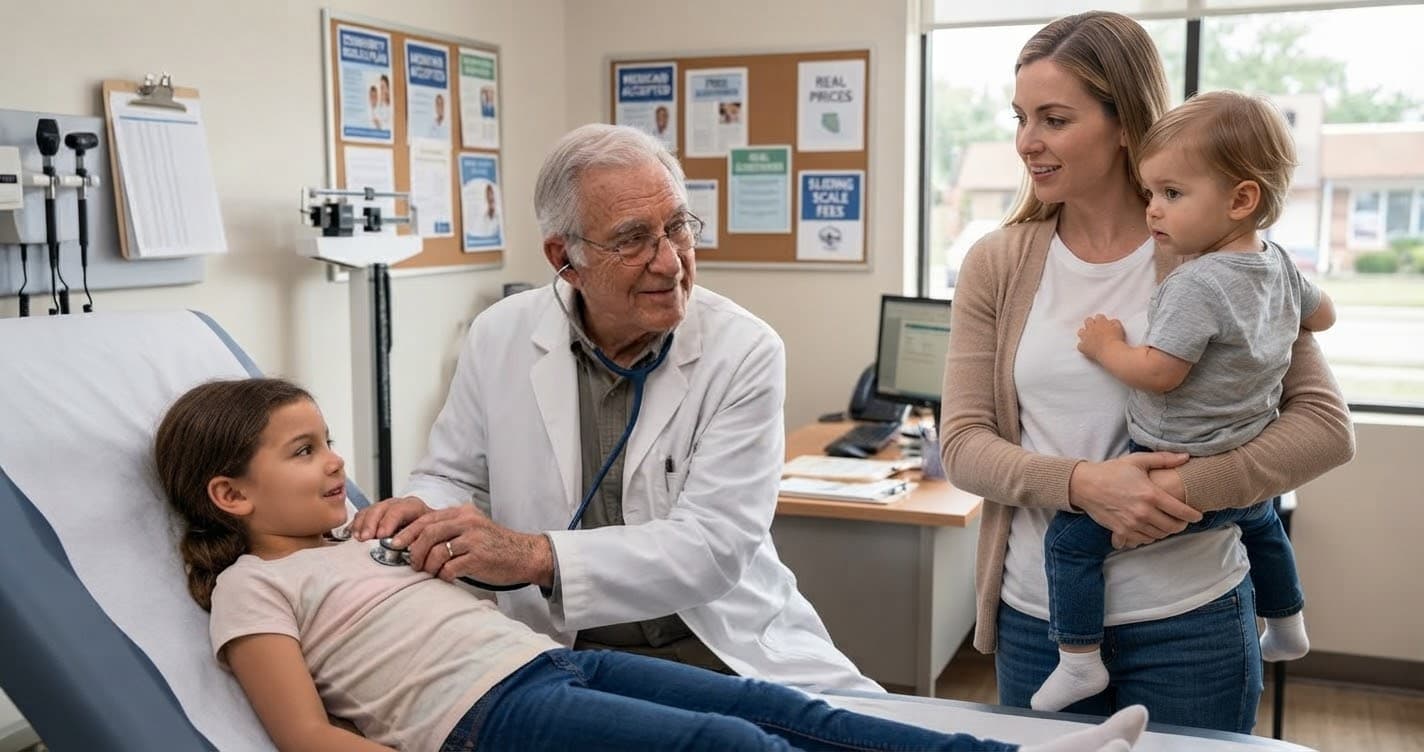
1. Federally Qualified Health Centers (FQHCs): also called community health centers, are federally funded clinics that exist specifically to serve people regardless of insurance status or ability to pay. There are roughly 1,400 FQHC organizations operating more than 14,000 service sites across all 50 states, and together they serve over 30 million patients every year, about 1 in 10 Americans. One healthcare access guide put it bluntly, calling FQHCs "one of the most underused safety nets in American healthcare." That's not an exaggeration. Most people who'd qualify have simply never heard this exists.
What they actually cover: primary medical care, dental care, mental health services, and often an on-site pharmacy, with many offering 340B discount drug pricing, a federal program letting safety-net clinics buy medication at steep discounts and pass the savings directly to patients.
How the pricing actually works: FQHCs are legally required to use a sliding fee scale based only on your household income and size, nothing else. If your income sits at or below the federal poverty level, visits often run a nominal $20 to $50. Sliding-scale eligibility generally extends up to 200% of the federal poverty level, so you may qualify even if you assumed your income was "too high" for this kind of help.
Here's the headline honesty you need before anything else: funding for FQHCs is genuinely stable right now. The 2026 Consolidated Appropriations Act funds the program at $4.6 billion for this fiscal year. But a health policy tracker specifically described this funding as "stable but short-authorized," meaning it's secure for now, not guaranteed indefinitely. This is the same honest caveat we gave you about LIHEAP. Use what's available now. Don't assume it's permanent.
How to apply: find your nearest center directly through HRSA's official finder tool at findahealthcenter.hrsa.gov. No referral is required. Walk in or call directly to ask about their sliding fee scale and what documentation they need to confirm your income.
THE DENTAL SIDE: five real, distinct paths, not just one
Dental care gets left out of most healthcare assistance conversations entirely, which is exactly why this section matters most. Here are five legitimate, verified channels, and they're not all the same thing.
1. Dental school clinics: Dental students in their final clinical years provide treatment under direct, step-by-step supervision from licensed faculty dentists, at 50% to 70% below private practice rates, with some sources citing savings up to 80%. Appointments run longer, since every step gets checked by an instructor, but this is widely regarded as genuinely reliable care, not a lesser version of it.
2. Dental hygiene school clinics specifically: This is the detail almost nobody mentions. Routine cleanings at a dental hygiene school commonly cost just $5 to $25. Nearly every state has at least one.
3. FQHC dental services: The same sliding fee scale described above applies to dental care at most community health centers.
4. Dental Lifeline Network (Donated Dental Services / DDS): Since 1985, this organization has donated over $500 million in free, comprehensive dental care to more than 170,000 patients, delivered entirely by volunteer dentists.
Eligibility is specific: you must be 65 or older, living with a disability, or medically fragile, with genuinely no other way to access or afford care. There is a real waitlist, so apply as early as possible rather than waiting until a dental problem becomes urgent. Reach them directly at (303) 534-5360, or through dentallifeline.org.
5. Mission of Mercy (MOM) events: Free, pop-up dental clinics run by state dental associations. No income proof required, first-come-first-served, genuinely free the day of the event. These pop up periodically rather than running continuously, so watch your state dental association's announcements for the next one near you.
The fastest first move, consistent with everything else in this series
If you need care and genuinely don't know where to start, call 211. This is the same free, universal referral line we've pointed you toward for rental assistance and holiday programs, and it works exactly the same way here. Tell them specifically that you need medical or dental care and can't afford it, and they'll connect you to whatever's actually available and currently funded in your specific county.
What to actually do this week
Don't wait for a dental problem to become an emergency, or a health concern to become urgent, before you look into any of this. Find your nearest FQHC today, even if you're not sick right now, and ask what their sliding scale actually looks like for your income. If dental care is what you're avoiding, call a nearby dental or dental hygiene school first. The wait times and appointment availability at both tend to be shorter than people assume, and the cost difference is substantial enough that it's worth the call alone.
If you're building out the rest of your safety net alongside this, Financial Help for Single Parents: 7 Verified Resources That Pay covers additional year-round assistance that pairs naturally with healthcare access.
Next: ACA Open Enrollment: Dates, Real Costs, and Free Help You Didn't Know Existed
Program details, eligibility rules, fee ranges, and funding levels above reflect the most current, verified information available as of the last review date noted at the top. FQHC and dental program availability, fees, and funding change over time and vary by state and individual clinic. Always confirm current details directly with the organizations linked above before relying on them.